Identify which custom fields, calendars, tables, filters, groups, and resources are/will be commonly used across Subproject files and create a Shell file for your Subprojects and Master Project.
In each Subproject, make use of a Project Unique ID (PUID) field so there is always a reference back to a task's "native" Unique ID when Subprojects are integrated into a Master Project.
Use the Handoff Method to identify dependencies (predecessors and successors) that cross Subproject boundaries. This will make it possible to use many of SSI's Multi-Project tools. Only create a Handoff between Subprojects if there is a demand from the Receiver.
Use the "Unlinked" method to insert Subproject files into the Master Project shell. This method avoids all of the problematic issues teams will usually encounter when using the "Linked" method. It also gives total change control and responsibility of any given Subproject to a single individual or team, which is usually a good thing.
Treat the Master Project as a temporary read-only file to see where dates are, submit deliverables, and perform program level analyses. All of the actual day-to-day work should occur within the Subprojects. Reintegrate the Master Project file as often as needed by the program team, using the most up to date Subprojects. If changes outside of connecting Handoffs cannot be avoided, use SSI's Change Tracking Tools to record changes so they can easily be replicated in the Subprojects that are affected.
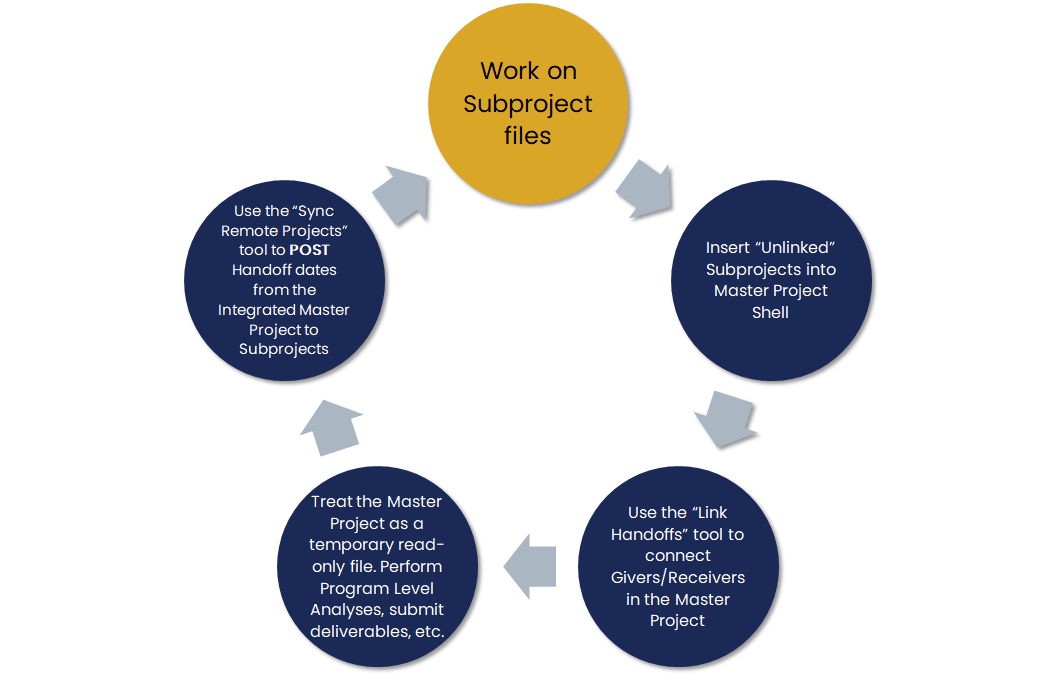
The following diagram represents SSI's recommended battle rhythm for working on and integrating Subprojects into the Master Project. This process should be performed on a regular recurring basis. In the diagram, the yellow bubbles represent tasks that are the responsibility of the Subproject Owners, while the blue bubbles represent tasks that are the responsibility of the Master Project Integrator: