SSI's Multi-Project tools require teams to use the Handoff Method or Giver/Receiver Method. This is just a way of identifying and marking dependencies that exist between Subprojects so they can be easily connected and synchronized with each other.
The Handoff Method method requires the use of a single text field to and two flag fields in order to mark Handoffs in Microsoft Project. The text field is used to input The Handoff Code. The Handoff Code is a unique code or number used by both the Giver(s) and the Receiver(s) of the Handoff pair. The unique code is usually determined and assigned by the Receiver. The flag fields are used to input which item(s) will be the giver(s) or predecessor(s), and which item(s) will be the receiver(s) or successor(s).
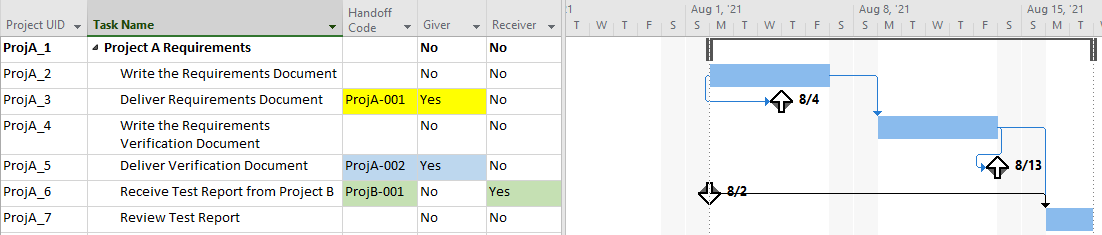
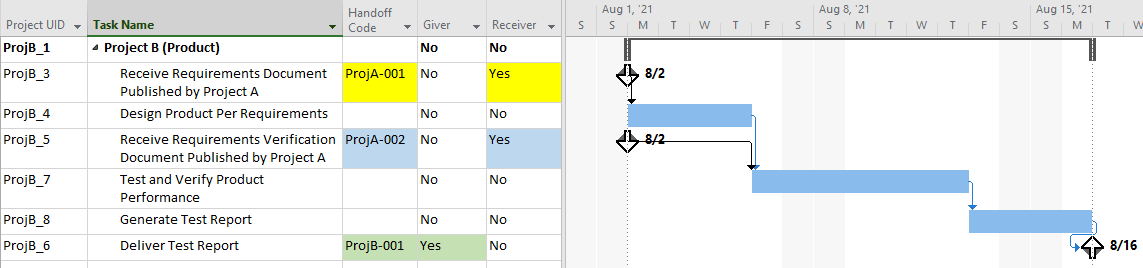
SSI recommends utilizing Milestones to represent cross project givers and receivers. Using milestones gives a bit more control over dependency relationship type when linking Handoffs together. See the Microsoft Project example below to see how the Handoff Method was implemented in Project A and Project B. Pay attention to how the Handoff Code and Giver/Receiver Flag fields are used to identify the Handoff points.
In these examples the following Handoffs Exist:
ProjA-001, which connects Unique ID "ProjA_2" as a predecessor to "ProjB_3"
ProjA-002, which connects Unique ID "ProjA_5" as a predecessor to "ProjB_5"
ProjB-001, which connects Unique ID "ProjB_6" as a predecessor to "ProjA_6"
In these examples, the syntax for the Handoff Code is the abbreviated name of the project that is the predecessor in the Handoff relationship, followed a dash, and then by the number of the giver that is coming from that project. This convention is just our personal preference, but you may choose any convention you like, as long as your Handoff codes can connect givers and receivers together.