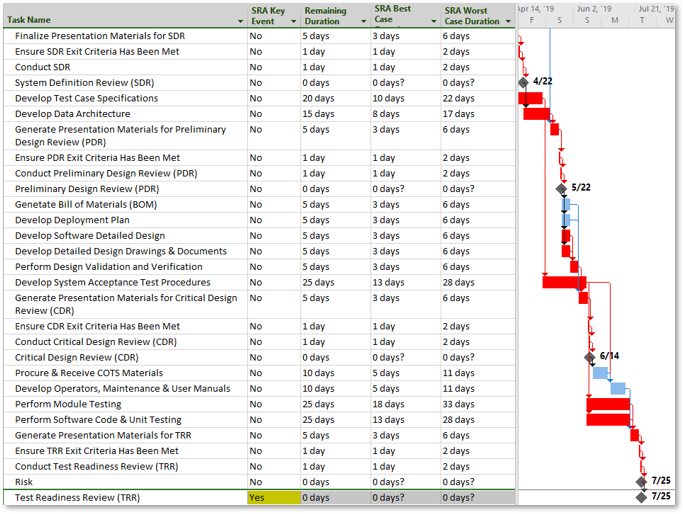
Best-Case and Worst-Case duration estimates should be established on activities that logically precede your identified Key Event(s). While duration uncertainty estimates can be entered for any task in the schedule, activities that are not logically connected to Key Events will have no impact on the analysis results because they cannot affect the Key Event’s forecasted completion date no matter how their duration is changed.
To enter duration estimates on tasks in your schedule, complete the following steps:
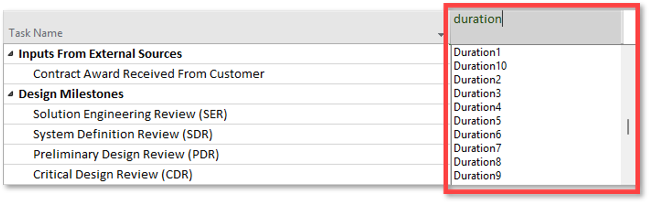
Identify two unused duration fields within the schedule: one to store tasks’ Best-Case duration estimates and another to store tasks’ Worst-Case duration estimates.
Identify the tasks that logically precede your key event(s):
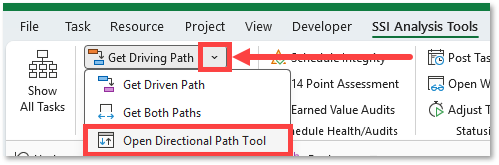
SSI’s Directional Path Tool can be used to the tasks logically preceding key events.
Enter tasks’ Best-Case duration estimates in the designated Best-Case duration field and their Worst-Case duration estimates in the designated Worst-Case duration field by either manually entering them in or by having them calculated through the Risk Factors tab of the Schedule Risk Analysis tool.